
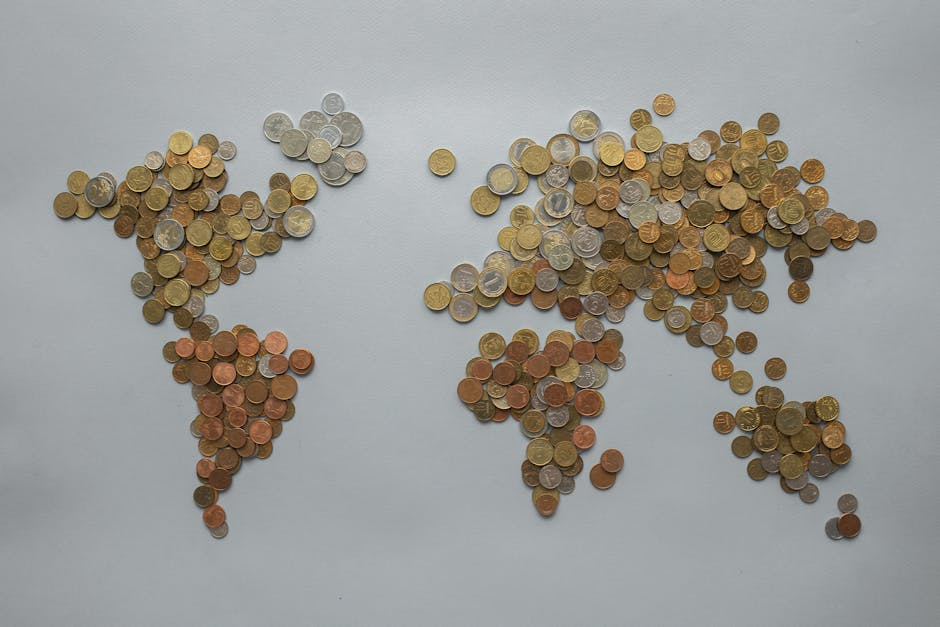
HSBC's Global Power and Legal Challenges
HSBC, the world's largest bank, faces mounting scrutiny over its role in facilitating drug cartel money laundering and sanctions evasion despite its continued success. The bank, which has long been lauded for its global reach and financial strength, has become a focal point in discussions about the intersection of crime and finance at an unprecedented scale.
Global Context
HSBC's prominence is underscored by its vast operations spanning over 60 countries and its role in moving trillions of dollars globally. The bank's continued prosperity, despite facilitating crimes from drug money to sanctions evasion, raises an unsettling question: what happens when a bank becomes too big to punish?
A Bank of Two Worlds
HSBC, short for Hong Kong and Shanghai Banking Corporation, was founded in 1865 in British Hong Kong to finance colonial trade. Its early business centered on the booming opium trade between British India and Qing China, establishing a colonial-era legacy that continues to shape its dual identity today.
Fast forward to today, and HSBC has grown into a colossus of global finance. Headquartered in London but maintaining a major base in Hong Kong, the bank operates as a central nervous system for global commerce, channeling capital across Asia, Europe, the Americas, Africa, and the Middle East.
What's unique about HSBC is its dual identity. Legally, it's a British bank, having moved its headquarters from Hong Kong to London in 1993 ahead of Hong Kong's handover to China. Economically, however, its lifeblood is in Asia. About two-thirds of HSBC's profits come from Asia, with nearly half of its profit generated in China alone.
This east-west straddle means HSBC is not quite British and not quite Chinese. It has loyalties and exposures in both camps. Over 150 years, it became a powerhouse in greater China. Its very name is a nod to Hong Kong and Shanghai, even as it remains a pillar of London's financial industry.
Think of HSBC as the financial bridge between east and west. It has the political clout of a British institution and the cultural and business ties of an Asian institution. It prints Hong Kong's bank notes, yet it's regulated in the UK. This strategic ambiguity, global but beholden to multiple powers, will become central to our story.
A Legacy of Colonial Trade
HSBC's early decades saw it financing trade flows that other banks wouldn't touch. By design, it was the bank of two worlds, British financiers catering to Asian commerce. Thomas Sutherland, HSBC's founder, set it up in Hong Kong with one clear purpose: to capitalize on east-west trade, including infamously, opium, under sound Scottish banking principles.
The bank expanded quickly in Asia, opening in Shanghai the same year and soon across the region. Through wars and upheavals, HSBC became the leading bank of Asia, even issuing local 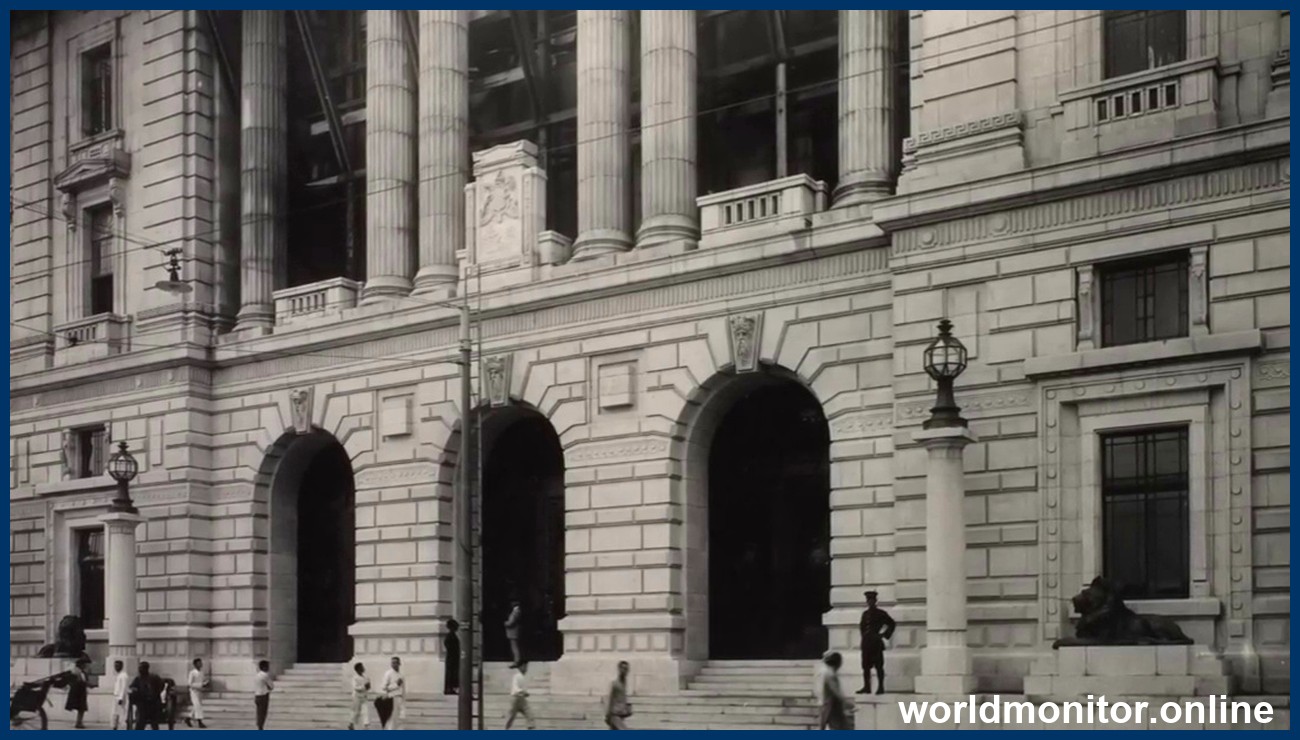
The timing was no coincidence. With Hong Kong's 1997 return to China looming, HSBC hedged its bets by securing a home base in the west while keeping its fortune in the east. The result is a bank that is simultaneously an arm of British banking and an emblem of Asian finance.
By the 2000s, HSBC marketed itself as the world's local bank. Its logo adorned city centres from New York to Nairobi to New Delhi. This unique structure, a British legal shell with an Asian profit engine, gave HSBC strategic advantages. It could move seamlessly between different regulatory systems and client bases.
But it also fostered a kind of strategic ambiguity. Regulators and governments often weren't sure how to